Correction (July 21, 2026): This version removes unsupported descriptions of program operations, student selection, attendance interventions and accountability policy, along with causal and predictive conclusions about why virtual-program rates differ. The estimated chronic count is now explicitly identified as the reported rate multiplied by enrollment, and Clark County comparisons are labeled as constructed enrollment-weighted aggregates of school rows.
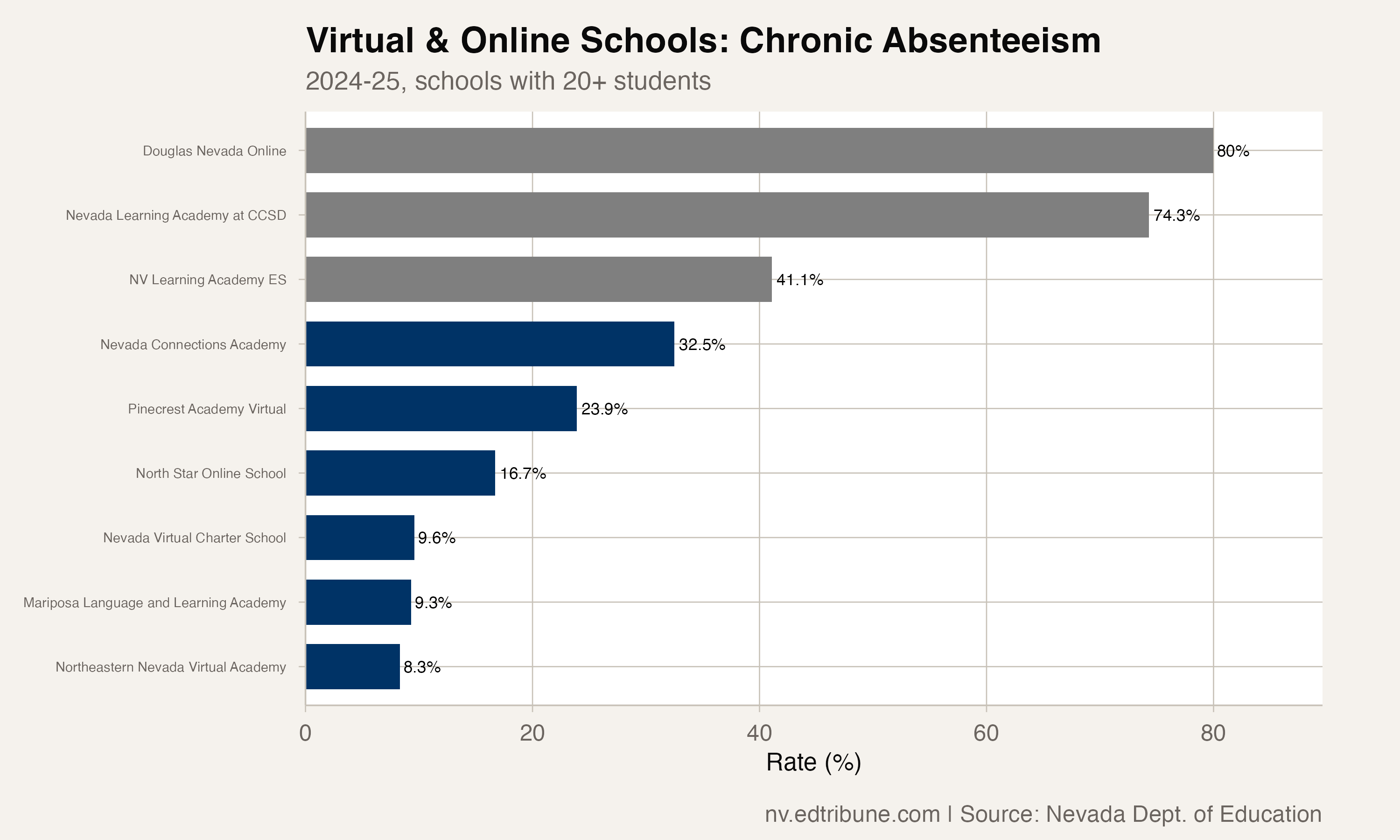
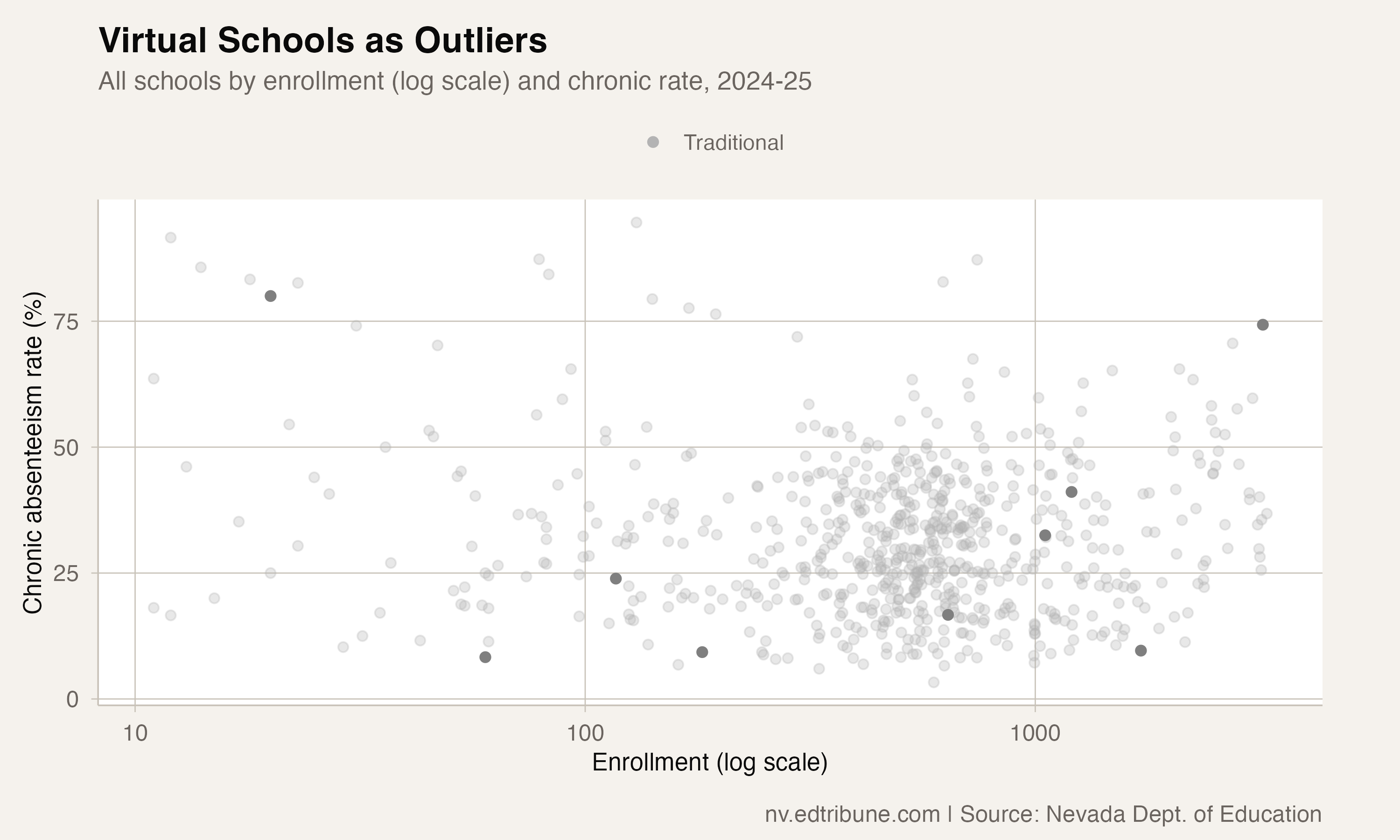
Selected Nevada virtual and online programs covered nearly the full chronic-absence distribution in the 2024-25 package. Their rates ranged from 8.3% to 80.0%, a 71.7-point spread.
Eight selected programs
Douglas Nevada Online had an 80.0% rate among 20 enrolled students. Nevada Learning Academy at CCSD reported 74.3% among 3,204 students, NV Learning Academy ES reported 41.1% among 1,204 and Nevada Connections Academy reported 32.5% among 1,052.
Pinecrest Academy Virtual reported 23.9% among 117 students, North Star Online School 16.7% among 640, Nevada Virtual Charter School 9.6% among 1,717 and Northeastern Nevada Virtual Academy 8.3% among 60.
These are package school rows selected for the analysis; the attendance file does not document how the programs operate or why their rates differ.
Nevada Learning Academy was the volume outlier
Multiplying each school row's chronic-absence rate by its enrollment yields an estimated count, not a reported student headcount. Nevada Learning Academy's calculation is 2,380.6 students, or about 2,400 when rounded to the nearest hundred. That was the largest estimated count among Nevada school rows in the package.
The constructed Clark County comparison
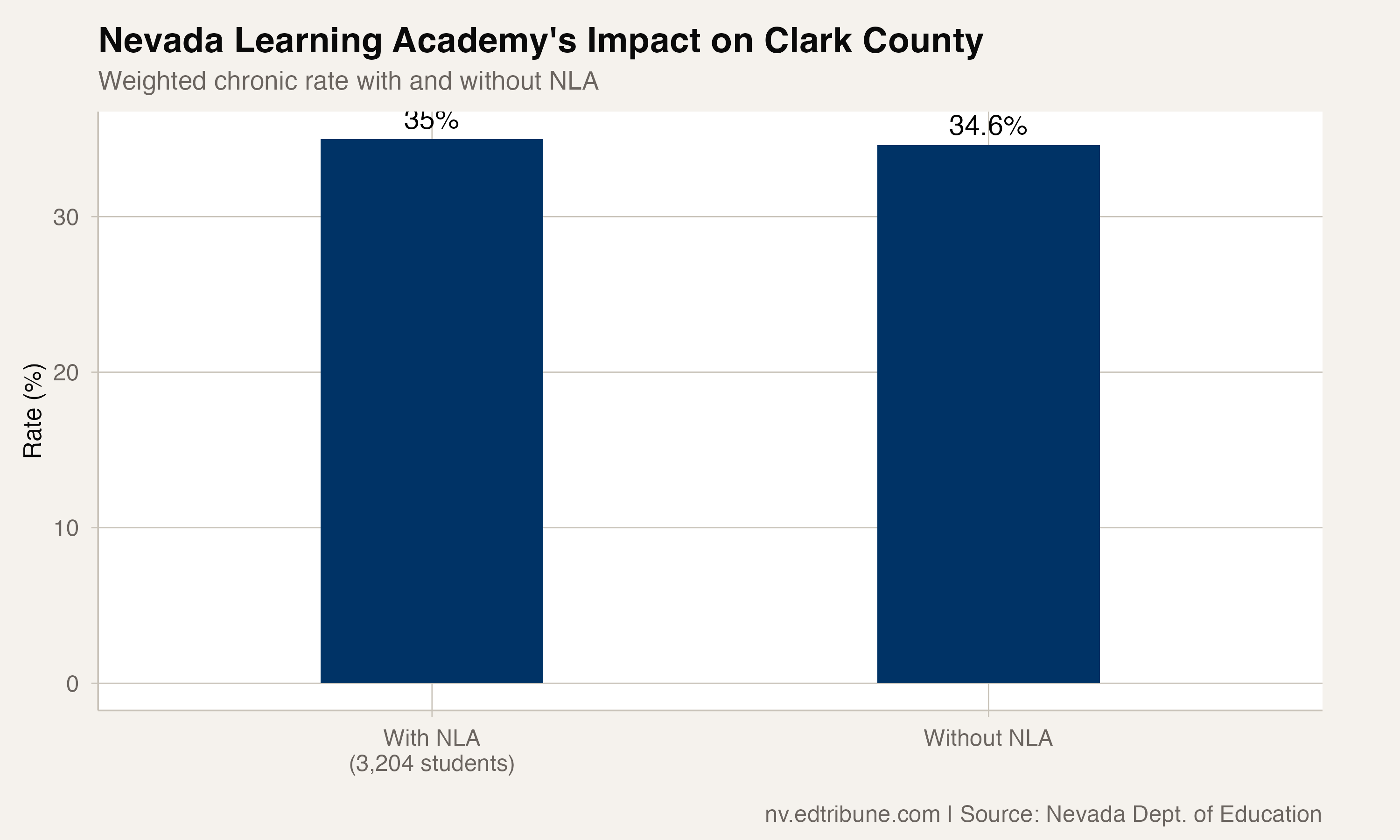
The package assigns Nevada Learning Academy to Clark County School District↗ET. Across Clark's school rows, total enrollment was 302,043. The constructed enrollment-weighted chronic rate was 35.0% with Nevada Learning Academy and 34.6% after excluding it, a 0.4-point difference.
Clark had 38 school rows above 50% chronic absenteeism. Statewide, 69 school rows exceeded that threshold. Those counts describe the package rows; they do not identify causes or prescribe whether particular programs should be included in accountability calculations.
Detailed code that reproduces the analysis and figures in this article is available exclusively to EdTribune subscribers.
Discussion
Sign in to join the discussion.
Loading comments...